Sarpeda unlocks twice as many markers and pristine signal from your existing microscopes — no hardware changes, no new reagents. A pure software upgrade for the infrastructure you already own.
See It in ActionJust 3–4 color channels to resolve dozens of cell types, co-expression patterns, and spatial relationships. Biology is far more complex than what conventional microscopy can capture in a single acquisition.
Autofluorescence, channel bleed-through, and non-specific binding bury the true signal. Researchers constantly fight a thick wall of noise that obscures what matters most.
Separates two markers labeled with the same fluorophore using AI. Double your marker capacity in a single acquisition. Six markers plus DAPI on a four-channel microscope — from one tissue section with standard reagents.
Precision removal of autofluorescence, bleed-through, and non-specific binding artifacts. A true, complete separation of all background signal — learned from routine negative controls. This is not your typical background subtraction.
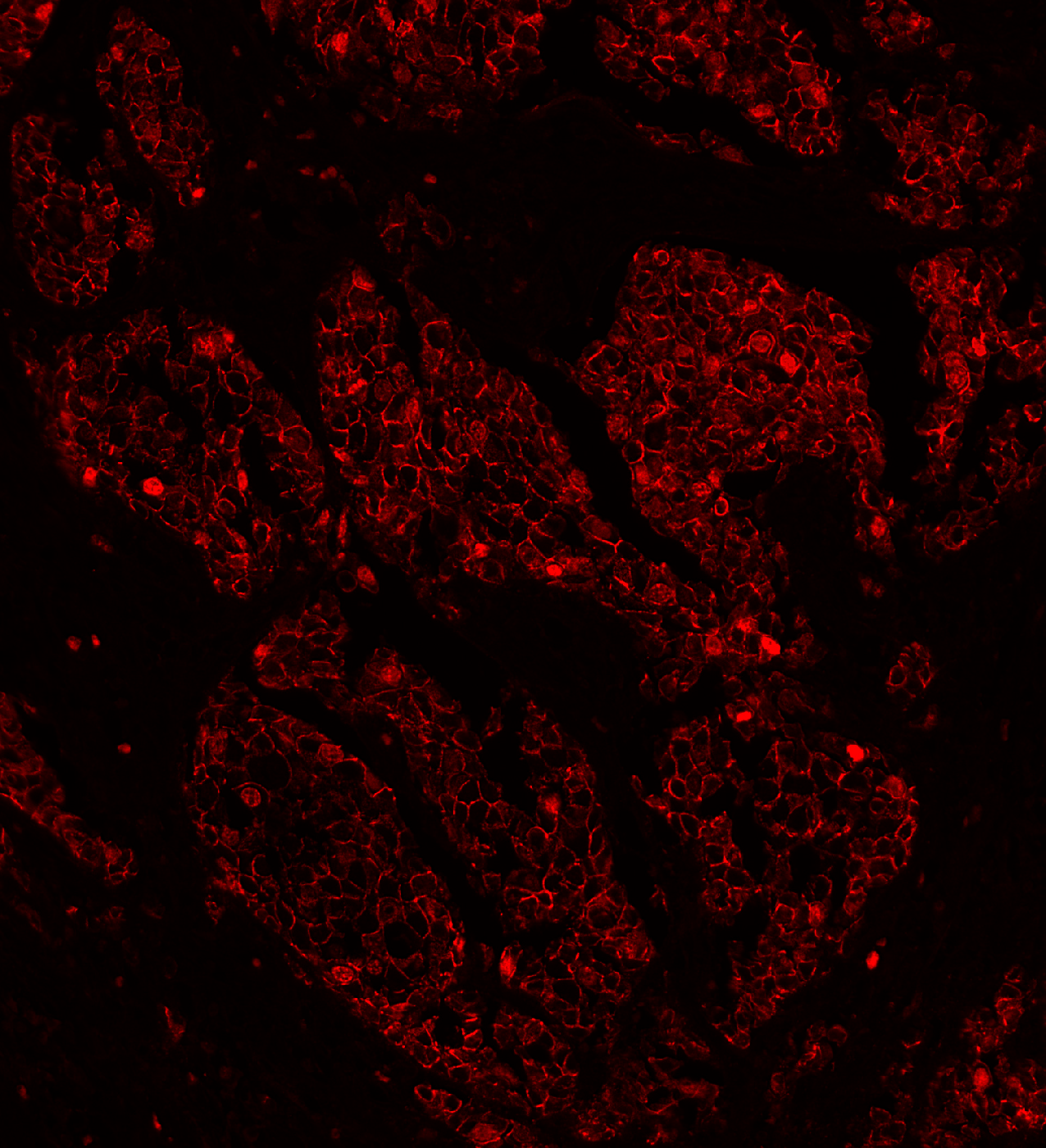
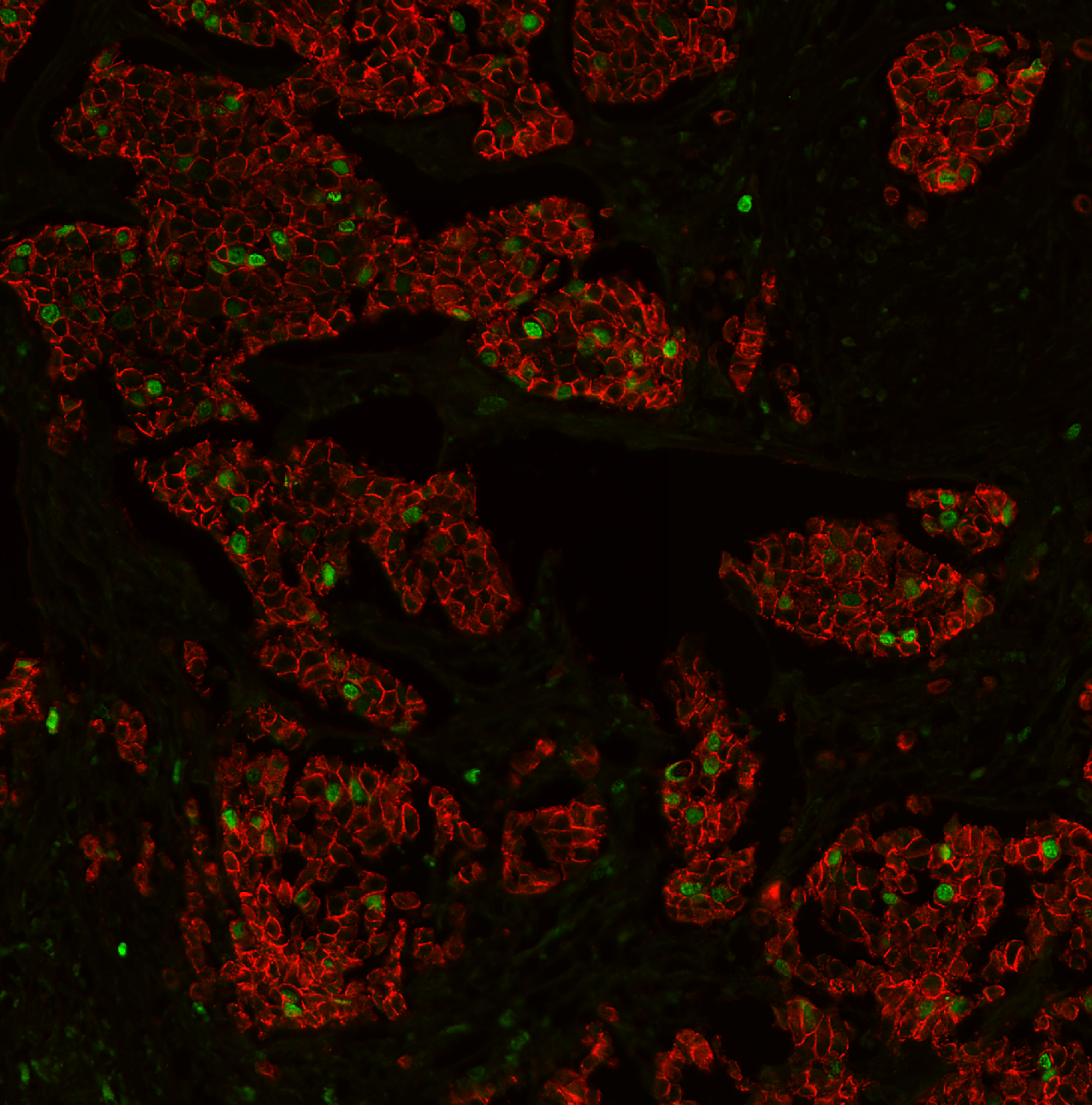
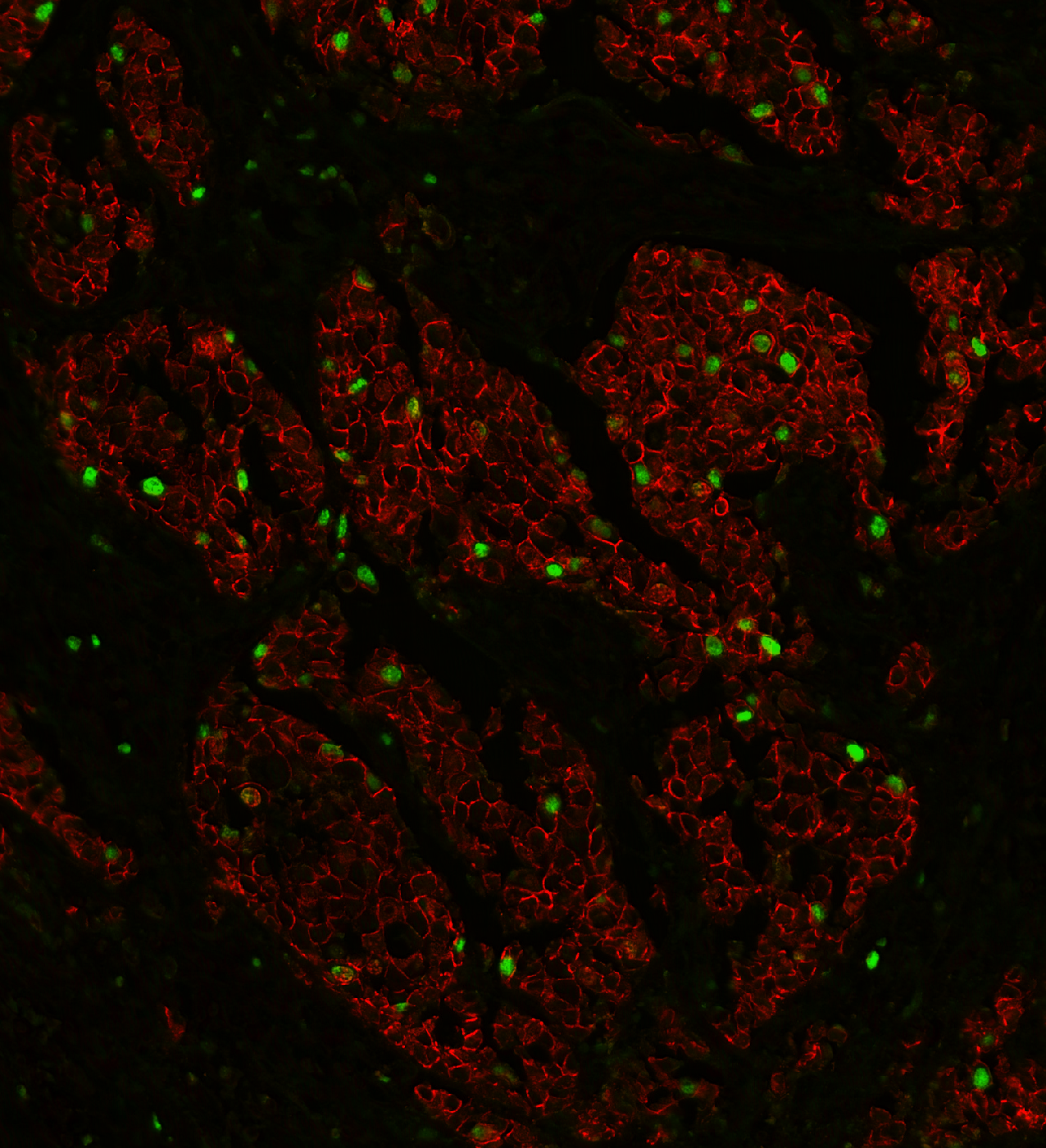
Breast tissue: E-cadherin and Ki-67 labeled with the same fluorophore, then separated by AI. Green nuclei (Ki-67) clearly emerge from the red membrane staining (E-cadherin).
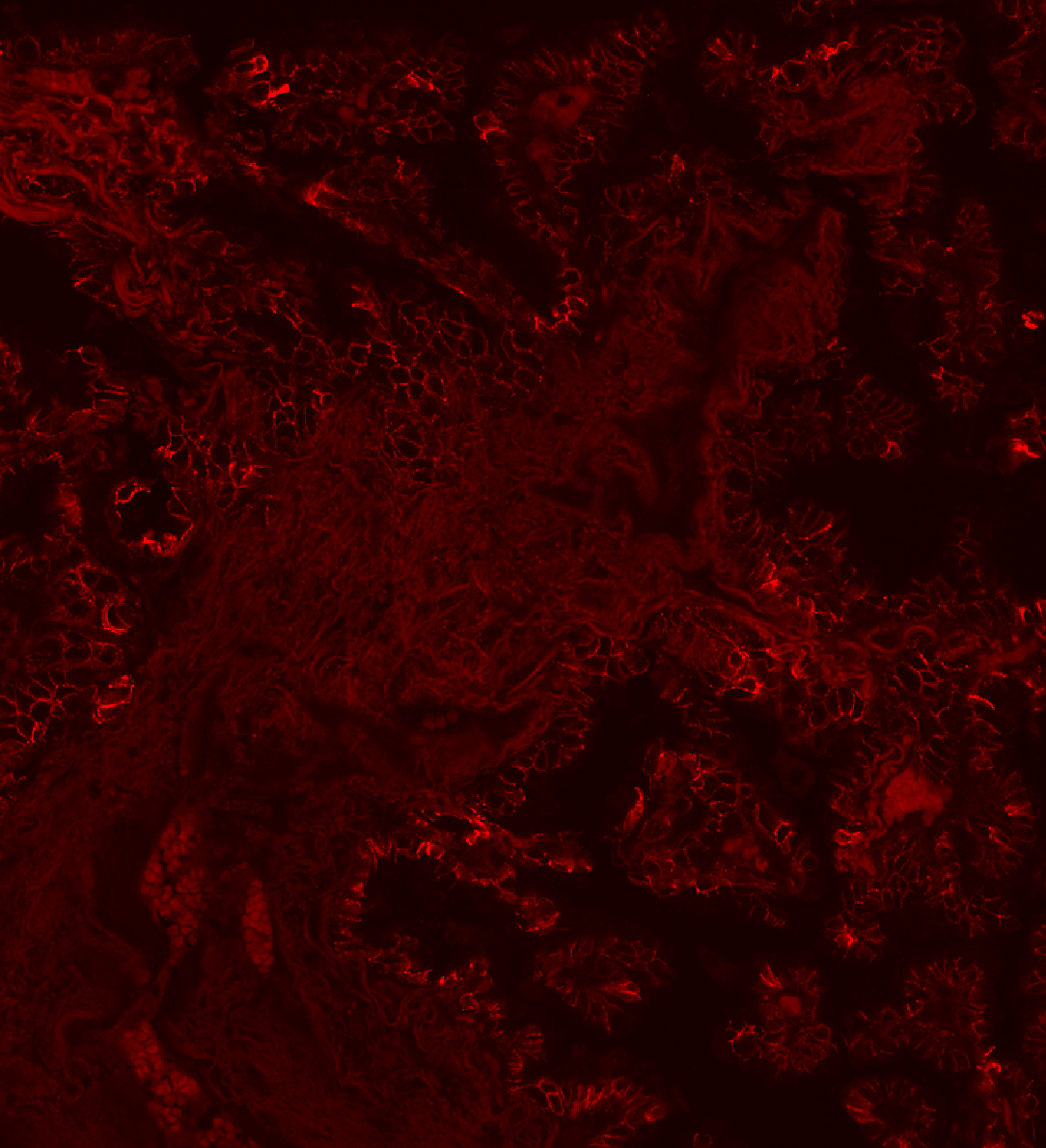
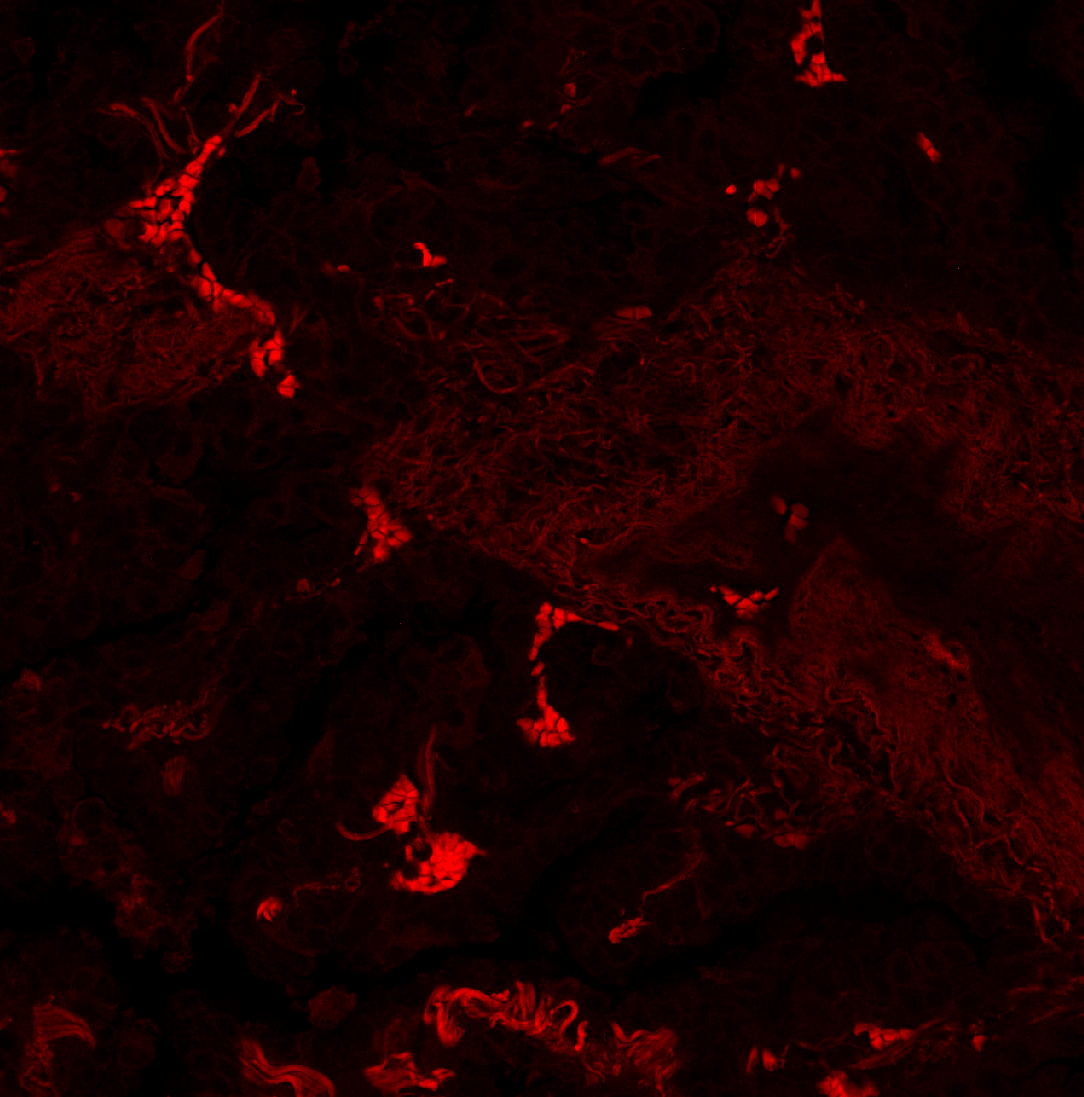
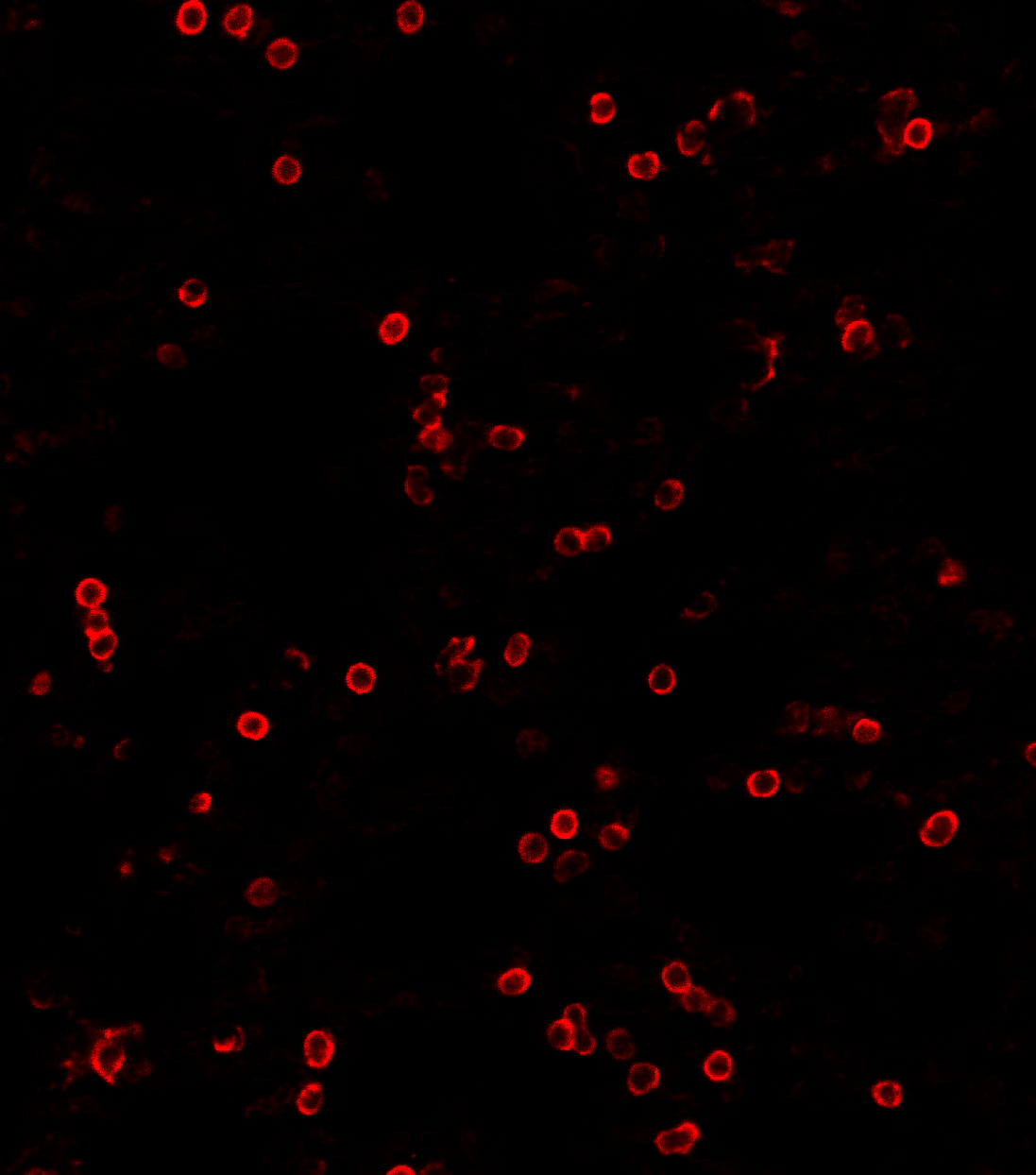
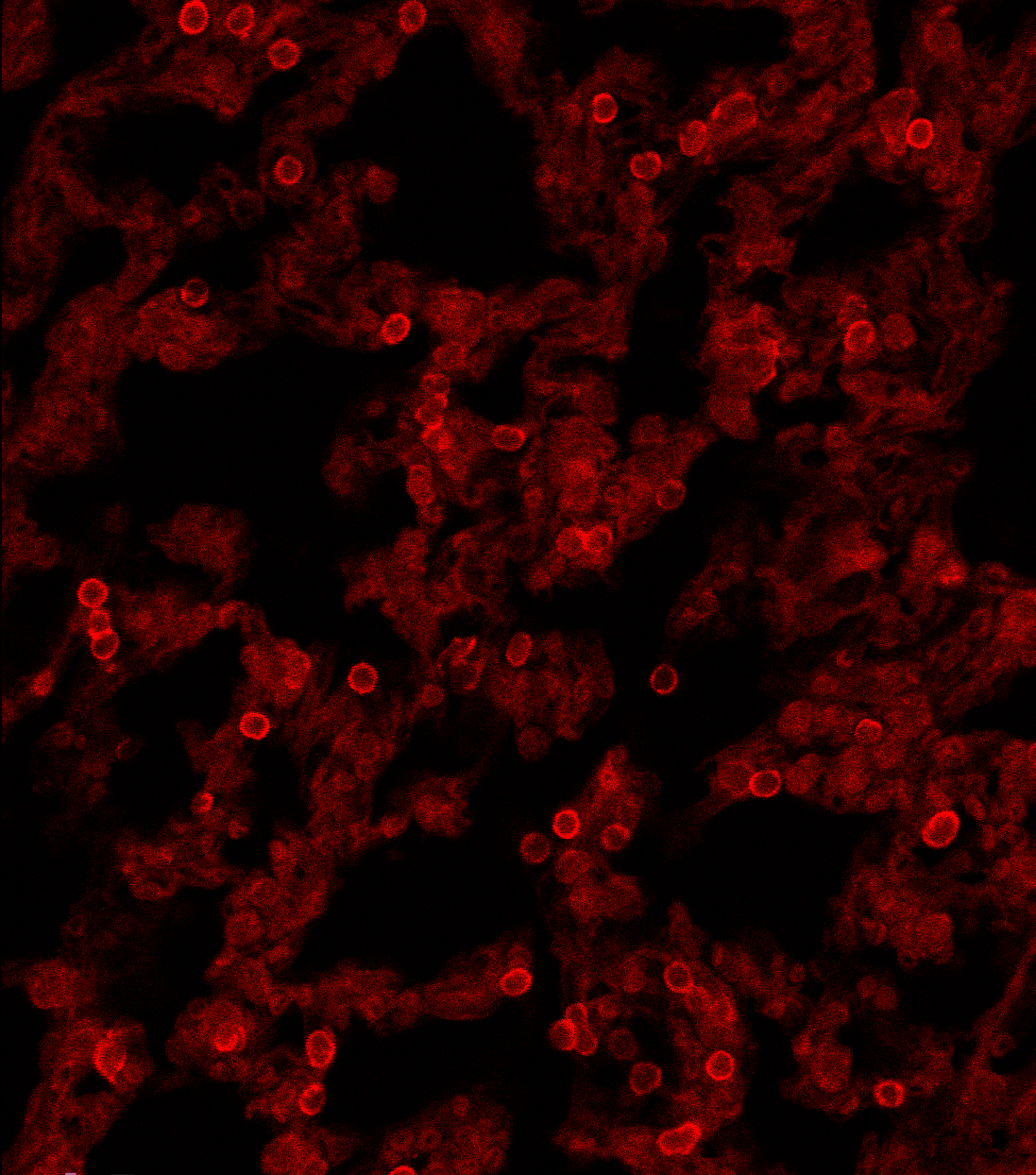
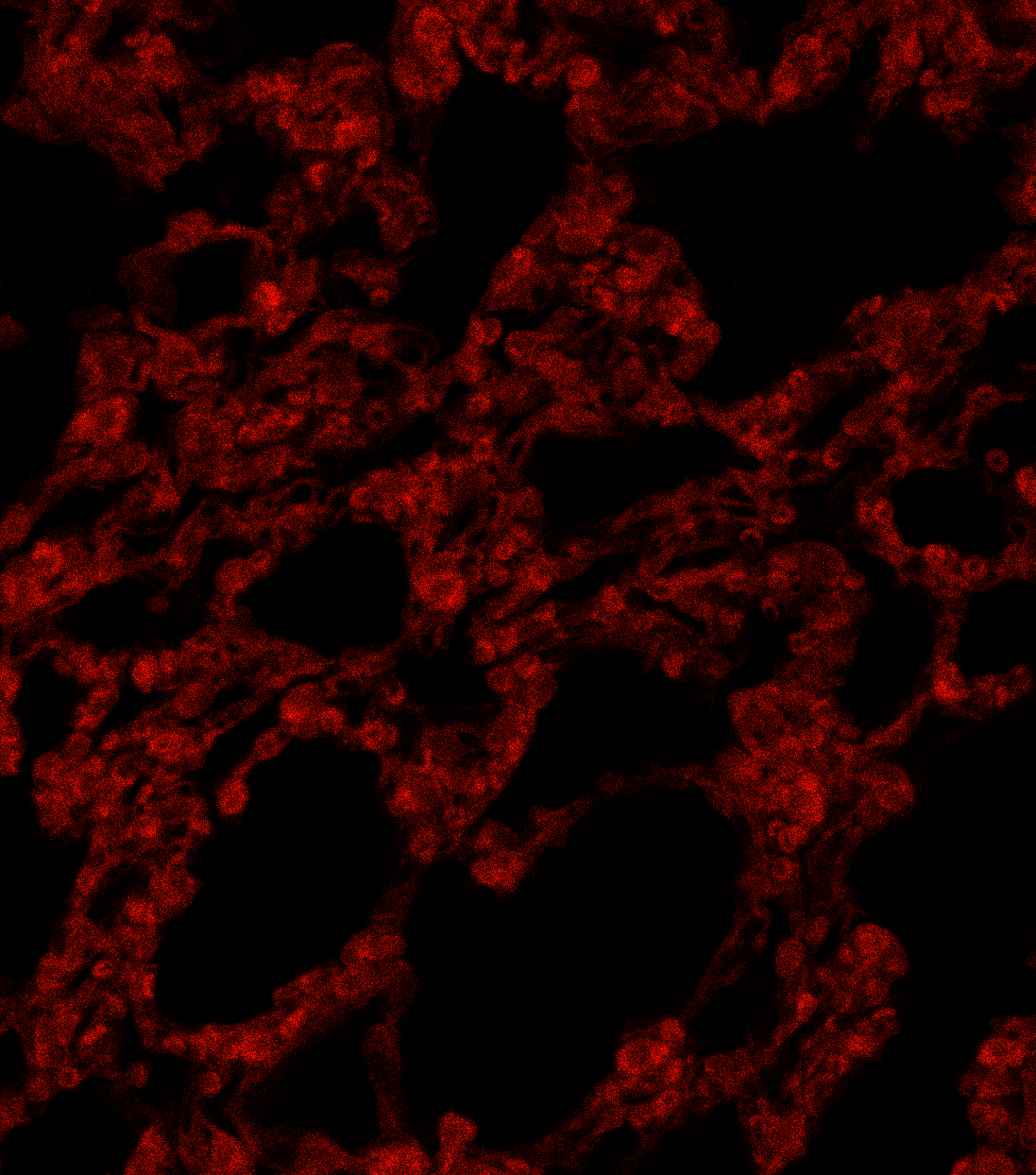
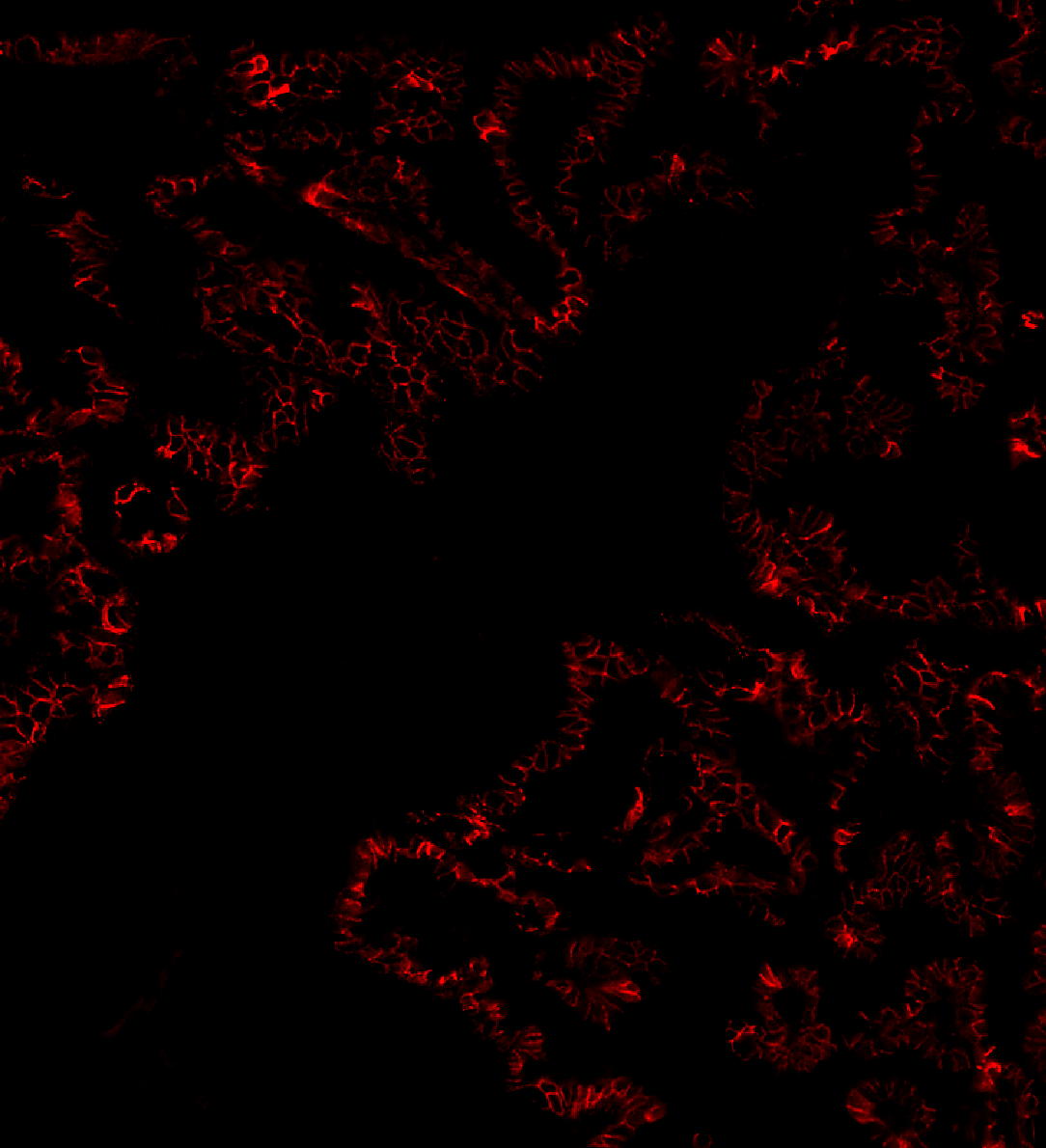
Lung tissue: E-cadherin signal buried in autofluorescence, then cleaned by AI. The true biological signal emerges with single-pixel detail preserved.
Six markers plus DAPI on a four-channel microscope, from a single tissue section. With indirect labeling, only three standard species needed — simpler reagents, lower cost.
Precision removal of autofluorescence, channel bleed-through, and non-specific binding. Reveal the true biological signal hidden beneath noise.
Works with any microscope platform. Integrates into existing analysis pipelines. No hardware changes, no new reagents. A software upgrade for existing infrastructure.
Conserve precious patient samples. Achieve true co-expression analysis in a single acquisition with doubled marker capacity.
More accurate RNA reporter detection with clean signal. Cut the number of imaging cycles in half.
Marker-rich phenotypic assays with reliable downstream quantification. Rescue failed acquisitions that would otherwise be lost.
Background removed from 3D matrices. Higher information density per sample. Fewer replicates needed.
20+ years in AI and biological imaging. Technical and scientific leader with two successful exits.
Professor & Microscopy Core Director at Baylor College of Medicine. Early Sarpeda adopter.
Precision oncology and spatial biology CEO.
Founding CEO of AxoSim/28bio. Organ-on-a-chip pioneer.
We're signing up partners ready to transform what their microscopes can do.
Contact Us